

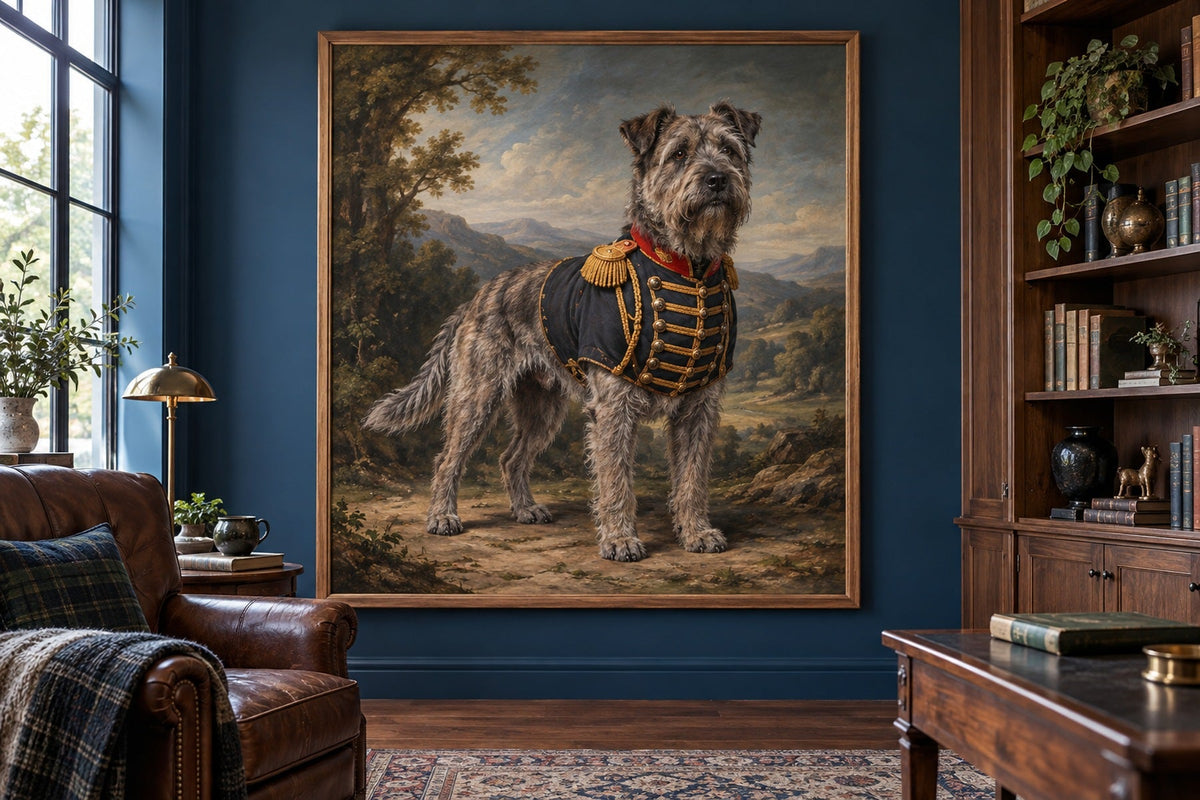
Around 1985, Belgian dog enthusiasts collecting colostrum from dairy cows on Ardennes farms came across something many thought extinct: a few surviving cattle dogs, still working. That is the story told by the FCI standard.
| FCI | Group 1 (Sheepdogs and Cattle Dogs), Section 2 Cattle Dogs, Standard No. 171, with working trial |
|---|---|
| Country of origin | Belgium |
| Size (height at the withers) | males 56 to 62 cm, females 52 to 56 cm, tolerance of 1 cm above or below |
| Weight | males 28 to 35 kg, females 22 to 28 kg |
| Life expectancy | no reliable study figure found (N/A) |
| Coat | dry, harsh and tousled outer coat, around 6 cm on the body; moustache and beard 5 to 6 cm; very dense undercoat, even more abundant in winter |
| Colours in the standard | all colours except white, often a mixture of grey, black and fawn hairs, also brown, rust-red or straw yellow; a white chest mark or white toe tips permitted but undesirable |
A farm dog with no claim to elegance
In the Belgian Ardennes, the breed was always simply called the cattle dog. A harsh climate, rough terrain and local poverty shaped the type: only the toughest dogs remained, driving dairy cows and sheep, later pigs and horses too. During both world wars, they accompanied poachers. The standard describes a short, compact, muscular dog with a powerful head and a gruff, bearded face.
Almost lost twice
In Liège in 1903, Professor Reul found the first ideal example in a male called Tom; Belgium recognised the standard in 1923. Many farms then disappeared, along with their working dogs. Following the discoveries around 1985, breeders began producing dogs close to the standard from about 1990. A second line emerged in 1996, quietly preserved by cattle drovers in the north. The larger Bouvier des Flandres belongs to the same section.
Playful, curious and stubborn when it matters
The standard describes endurance and energy, playfulness, agility and sociability, with adaptability as the strongest quality. The breed also defends people, possessions and territory tenaciously and courageously. That watchfulness needs guidance: you decide who may enter the property.
Following you in a semicircle
Off lead, the standard says the dog often stays behind their person and follows in a semicircle, reflecting the droving instinct. They rarely remain in one place for long. Provide real work such as treibball, herding practice or tracking, alongside long outings in any weather.
Keeping the shaggy look is compulsory
Any trimming is a disqualifying fault under the standard. For you, this means thorough weekly brushing, more often during shedding, plus a quick beard clean after meals. The standard describes a short tail as usual, notes that many dogs are born tailless and permits a long tail in countries prohibiting docking. Germany is one of them. In Germany, docking is generally prohibited under Section 6 of the German Animal Welfare Act.
A genetic test belongs before the puppy purchase
No reliable study figure exists for lifespan; McMillan and colleagues’ UK analysis did not include the breed in survival analysis. Belgian researchers described five puppies with spinocerebellar ataxia, an inherited movement disorder beginning between 6 and 10 weeks of age. All had to be euthanised before eleven months. The cause is a recessive variant in KCNJ10, which also causes disease in the Malinois. Among 63 healthy, unrelated Bouvier des Ardennes, it accounted for 15 percent of gene copies (Stee et al. 2023). Ask for both parents’ test results.
Does this breed suit you?
Yes, if you live rurally, have experience with independent working dogs and provide tasks requiring strength and stamina. Less so if you want an easy-going city companion or frequently changing visitors. Puppies are rare, so allow time and patience to find a breeder.

Our breed quiz helps establish whether a dog with this much independence fits your life; our book “Which Dog REALLY Suits You?” (book in German) offers more detail. For the first weeks with a puppy, there is the free Puppy Starter Pack. Turn your shaggy cattle dog into a dog portrait from your own photo or a poster in a wooden frame.
Further reading
- Malinois: a working service dog who ends up in the living room
- Puppy biting: teaching bite inhibition without spoiling the fun
- Autumn shedding in dogs and cats: what is normal and when it is not
Sources, accessed on 20.10.2026: FCI Standard No. 171 Bouvier des Ardennes (fci.be, German version dated 05.06.2002, valid standard published on 25.10.2000) and FCI breed page No. 171; McMillan KM et al., Longevity of companion dog breeds: those at risk from early death, Scientific Reports 2024; Stee K et al., Spinocerebellar ataxia in the Bouvier des Ardennes breed is caused by a KCNJ10 missense variant, Journal of Veterinary Internal Medicine 2023.
Links to our books are affiliate links. Buying through them supports us at no extra cost to you.


